
Top AI Skills Needed in Northwest Arkansas 2025
NWA AI Team
Editor

Top AI Skills Needed in Northwest Arkansas 2025
Northwest Arkansas is seeing a boom in AI-driven roles across industries like retail, logistics, healthcare, and manufacturing. AI is reshaping how work gets done, and professionals with AI skills are in high demand. Job placement rates for AI bootcamp graduates in the region are as high as 92%, with starting salaries nearing $65,000.
Key AI Skills Employers Want:
- AI Basics: Understanding AI fundamentals to improve workflows and make informed decisions.
- Prompt Engineering: Writing effective instructions for AI tools like ChatGPT to get precise outputs.
- Data Analysis: Using AI to interpret trends and make better decisions.
- Ethical AI Use: Ensuring responsible AI practices, reducing bias, and safeguarding data privacy.
- AI Collaboration: Integrating AI into team workflows to improve productivity.
Training programs are available at local hubs like NWA AI and NWACC, offering hands-on courses and certifications to help professionals upskill quickly. Free Google AI courses are also accessible through state partnerships. Whether you're a beginner or experienced, now is the time to learn AI skills and stay competitive in this fast-changing job market.
Every Essential AI Skill You MUST Master in 2025
1. AI Basics and Business Planning
Grasping the essentials of artificial intelligence is becoming increasingly necessary for professionals navigating Northwest Arkansas's evolving job market. A solid understanding of AI not only helps pinpoint areas where it can improve business operations but also sets the stage for achieving impactful results.
At its core, AI processes data and automates tasks that typically require human intelligence. However, while AI can streamline operations and offer valuable insights, it still depends on human judgment to make nuanced decisions. This balance between automation and human oversight is key to identifying where AI can add the most value to your business.
Misunderstandings about AI often lead to missed opportunities or inflated expectations. Some fear that AI will completely replace human jobs, while others believe that implementing AI requires advanced programming skills. The truth? AI is most effective when it enhances human capabilities, and with tools like no-code and low-code platforms, integrating AI into business processes is more accessible than ever.
Spotting AI opportunities within your organization starts with identifying repetitive tasks, inefficient workflows, or decision-making bottlenecks. For example, local companies in Northwest Arkansas have successfully used AI to optimize inventory management and improve customer support systems.
Building a strong foundation in AI equips businesses to make smarter decisions about technology investments. It enables leaders to evaluate vendor solutions effectively, calculate potential ROI, and ensure compliance with industry regulations. Aligning AI initiatives with your company’s goals ensures that technology is implemented responsibly and strategically.
For those looking to deepen their AI knowledge, the NWA AI - Northwest Arkansas AI Innovation Hub offers a 12-week program focused on practical AI applications. This hands-on course covers everything from fundamental concepts to working with no-code tools, helping professionals integrate AI into their business strategies without requiring advanced technical expertise.
Additionally, NorthWest Arkansas Community College (NWACC) provides AI workshops and certification programs. These cover essential topics like data science basics, technical writing, and AI ethics - critical areas for ensuring responsible and effective business planning with AI.
The demand for AI skills in the region is clear. Over 75% of adults aged 35–44 in Northwest Arkansas express interest in learning about AI, and bootcamp graduates in the area are seeing job placement rates as high as 92%, with starting salaries nearing $65,000.
Equally important to understanding AI’s capabilities is recognizing its limitations. Challenges like data bias, lack of contextual understanding, and the necessity for human oversight must be considered when planning AI initiatives. By setting realistic expectations and avoiding overreliance on automation, businesses can ensure AI enhances rather than disrupts existing workflows.
Developing a strong grasp of AI fundamentals and their role in business planning empowers professionals to lead AI-driven projects effectively. As AI continues to transform industries across Northwest Arkansas, those who can bridge the gap between technology and business strategy will play a pivotal role in driving growth and innovation.
2. Writing AI Prompts and Using AI Tools
Becoming proficient in prompt engineering is quickly becoming essential for professionals in Northwest Arkansas. Crafting effective AI prompts involves creating clear, detailed instructions that guide systems like ChatGPT to produce accurate and useful responses tailored to your needs.
The difference between an average prompt and a well-crafted one can significantly influence your efficiency. For instance, instead of asking, "Tell me about marketing", you could refine the request to: "List three digital marketing strategies suitable for small businesses in Northwest Arkansas in 2025". This kind of precision helps AI tools understand your specific requirements and deliver actionable insights.
To write effective prompts, focus on the following:
- Clearly define the task.
- Provide the necessary context.
- Specify the desired format or length.
- Use precise, unambiguous language.
Refining prompts through trial and error ensures the output aligns with your expectations.
Local businesses are already reaping the benefits of prompt engineering. For example, a retail company partnered with NWA AI to train their team in prompt writing and AI tool usage. The results? A 40% reduction in response times and improved inventory accuracy through AI-powered chatbots. This success story highlights the tangible advantages of investing in these skills.
Tools That Make It Happen
Some of the most impactful AI tools available include Microsoft Copilot, Google AI platforms, ChatGPT, and various no-code automation solutions. These tools enable professionals to automate repetitive tasks, analyze data, improve communication, and streamline workflows - all without requiring programming expertise.
The accessibility of these tools is a game-changer. You can create efficient workflows and boost productivity without writing a single line of code. Local initiatives emphasize the practical, immediate applications of AI, making it easier for businesses to integrate these technologies.
NWA AI has partnered with local businesses to pilot programs that empower non-technical staff to automate workflows using no-code AI tools and prompt engineering. This approach has led to measurable productivity improvements and sparked new ideas for innovation.
Training and Community Support
Opportunities for training in AI are expanding across the region. In Fall 2025, NWACC introduced a certificate in artificial intelligence to address the skills gap in Northwest Arkansas. The program includes courses on prompt engineering, ethics, and access to resources like the Google AI learning series and Microsoft Copilot training, backed by the National Applied Artificial Intelligence Consortium.
Google has also stepped in with its Arkansas partnership, offering free AI scholarships for adults. These scholarships cover topics like generative AI tools and prompt writing, making high-quality AI education available to professionals at all career levels.
Beyond formal training, community engagement plays a vital role in skill development. Attending workshops, joining NWA AI meetups, and networking with other professionals creates a collaborative space for sharing ideas and solving challenges together.
Measuring Success
To track the value of AI training, businesses can monitor metrics like task completion times, output quality improvements, and overall productivity gains. These insights help quantify the return on investment and guide future decisions about adopting AI technologies.
3. Data Analysis and Making Decisions with AI
In Northwest Arkansas, the ability to harness AI-driven analytics is becoming a game-changer. It’s what separates those who make informed, strategic decisions from those who fall behind. To truly leverage these tools, a solid understanding of statistical concepts is a must.
Being able to interpret trends, correlations, and predictive patterns is essential when working with AI-powered dashboards. These platforms often present complex data visualizations or automated reports that still require human judgment to extract meaningful insights.
Popular tools in the area, like Google AI tools and Microsoft Copilot, simplify data analysis with user-friendly interfaces. They can uncover patterns, forecast trends, and deliver insights in minutes - tasks that might otherwise take hours. The real trick? Customizing these dashboards to suit your business needs and asking the right questions to unlock actionable insights.
Real-World Applications in Northwest Arkansas
These skills aren’t just theoretical - they’re making a tangible difference in the region. Take Fayetteville's smart city initiatives, for example. By using AI to analyze emergency response data, they’ve improved resource allocation and boosted public safety. Similarly, local startups and municipal agencies are leveraging AI to transform public service operations, driving digital innovation across hundreds of communities.
"AI tools have become integral to my daily work, streamlining processes and freeing up significant time for strategic contributions."
- Pamela Johnston, Senior Business Analyst
Overcoming Common Challenges
Despite its potential, many professionals in Northwest Arkansas face hurdles when interpreting AI outputs. A Heartland Forward poll revealed a widespread uncertainty about how to use AI effectively for data analysis and decision-making. This highlights a clear need for skill development.
The solution begins with AI literacy training that teaches not only what AI can do but also its limitations. This helps users validate insights and avoid overreliance on automated recommendations. Additionally, developing data visualization skills is crucial for presenting findings in a way that resonates with non-technical stakeholders.
Measuring Business Impact
To gauge the impact of AI analytics, focus on metrics like efficiency, cost savings, customer satisfaction, and revenue growth. Local case studies show that organizations adopting AI report faster and more accurate decision-making. This progress builds on earlier training, enabling professionals to turn analytics into real-world actions.
"The program rewired how I think about solving business problems using AI. I walked away with real skills I use every day to work smarter and faster."
- Amelia Leigner, Head of Product, Seek Invest
Consider this: Over 70% of graduates from the Google Career Certificate Program reported positive career outcomes within six months, thanks to programs that emphasize data analytics and AI skills. It’s clear that mastering these competencies can open doors in today’s competitive job market.
Building Practical Skills
For those looking to dive in, NWACC offers one-day workshops on AI data analysis and decision-making, designed for beginners. These sessions provide hands-on practice with real-world scenarios, so participants can immediately put their new knowledge to work.
The training also emphasizes ethical considerations and best practices for using AI-generated data. This includes ensuring transparency in how AI models produce insights, validating data sources, and adhering to responsible guidelines that protect both businesses and customers.
To keep the momentum going, NWA AI hosts monthly meetups and demo days. These events provide a collaborative space where professionals can build confidence, share challenges, and grow their network while mastering AI analytics tools.
4. Responsible AI Use and Rules
As AI becomes more integrated into workplaces across Northwest Arkansas, ensuring its use remains responsible is critical. Safeguarding data privacy, minimizing bias, and adhering to ethical standards are essential steps to maintain trust and regulatory compliance.
The risks are real. When AI systems fail - whether by making unfair decisions or mishandling sensitive data - the fallout can be severe. Reputations can be damaged, legal violations can occur, and, most importantly, people can be harmed. To address these challenges, professionals in the region are prioritizing ethics training alongside technical expertise. A key focus is on securing data and addressing bias in AI tools.
Understanding Data Privacy in AI Systems
Data privacy plays a central role in responsible AI use. When feeding data into AI systems, it’s essential to understand where that data is stored, how it’s managed, and who has access to it. This is especially important in Northwest Arkansas, where industries like healthcare, retail, and logistics handle massive amounts of sensitive information every day.
To ensure privacy, organizations should establish robust data governance policies before deploying AI. This includes using secure storage solutions, restricting access to authorized personnel, and providing employees with privacy training. For those looking to deepen their understanding, Google AI courses offer modules on responsible data management practices.
Identifying and Reducing AI Bias
AI systems are only as fair as the data and algorithms behind them. Bias can creep in through unbalanced datasets or poorly designed algorithms, leading to unfair outcomes in areas like hiring, lending, or customer interactions. Tackling this issue requires auditing datasets for fairness and involving diverse perspectives in the AI development process.
NWACC offers AI ethics courses that teach practical techniques for identifying and reducing bias in real-world projects. These skills are increasingly sought after as employers recognize that biased AI not only poses legal risks but can also harm community trust. Addressing bias ensures AI systems align with ethical and practical expectations.
Real-World Application: Fayetteville's Ethical AI Framework
Fayetteville’s smart city initiative is a shining example of responsible AI use. The city leverages AI for tasks like municipal chatbots and emergency response analytics, all while prioritizing ethical practices. This includes anonymizing citizen data and regularly auditing algorithms to identify and address bias. Fayetteville has also collaborated with local universities and tech companies to establish strict ethical guidelines.
This initiative serves as a blueprint for other organizations in Northwest Arkansas aiming to adopt AI responsibly while maintaining public trust.
Building Compliance Into Your Workflow
Compliance with regulations like HIPAA and state-level consumer privacy laws is non-negotiable. Businesses can achieve this by conducting regular audits, maintaining thorough documentation, and providing employee training.
To assist companies in navigating these requirements, the Arkansas Department of Commerce has partnered with Google to offer valuable resources.
Developing Practical Ethics Skills
Training programs that focus on AI literacy and ethical considerations are becoming a staple across the region. These programs are designed to equip individuals and organizations with the tools needed for responsible AI adoption.
NWA AI offers workshops and courses emphasizing human-focused AI practices, aiming to reduce uncertainty and promote responsible workplace integration. A noteworthy example is the University of Arkansas-Fayetteville’s $5 million grant (awarded in January 2025) to develop an AI tool for small farms. This project highlights the importance of ethical deployment and responsible data use, serving as a model for practical AI integration. In Northwest Arkansas, mastering ethics is just as important as technical know-how for leveraging AI’s full potential.
Staying Current with Best Practices
Responsible AI isn’t a one-and-done effort. As guidelines evolve and new ethical challenges arise, professionals must stay informed. Many turn to local workshops at NWACC, Google’s self-paced five-hour modules on responsible AI, and regional innovation hubs to keep their knowledge up to date.
Chris Lynch of NWACC underscores the importance of education and collaboration between industries to ensure ethical standards remain relevant. This ongoing commitment positions Northwest Arkansas as a leader in responsible AI adoption, supporting the region’s push for excellence in AI-driven workforces.
sbb-itb-e5dd83f
5. Working with AI as a Team Member
In Northwest Arkansas's rapidly changing job market, embracing AI as a collaborative partner is becoming a key ingredient for success. This shift challenges professionals to refine how they communicate, create workflows, and build trust between human team members and AI systems.
Building Communication Bridges
For human-AI collaboration to work effectively, clear communication is a must. Teams need to develop a shared way of discussing AI outputs, interpreting results, and making decisions based on AI's recommendations. This involves setting clear goals when working with AI systems and ensuring that insights generated by AI are easily understood by team members with varying technical expertise.
To address this, NWACC has hosted intensive workshops where participants learned how to use AI tools to improve teamwork and decision-making. These sessions focused on making collaboration smoother and boosting productivity. With strong communication practices in place, teams can define roles that create a balanced partnership between humans and AI.
Establishing Team Roles and Responsibilities
Integrating AI effectively requires a fresh look at team roles. Human members need to know when to lean on AI for its data-crunching abilities and when to rely on their own creativity, empathy, and strategic thinking. Establishing clear guidelines - such as who interacts directly with AI, how outputs are reviewed, and what approval steps are necessary - helps avoid confusion and ensures accountability.
Creating Effective Workflows
The most successful teams don’t just add AI into their processes - they adapt their workflows to make the most of it. This includes scheduling regular check-ins to evaluate AI performance, sharing insights gained from using AI, and updating procedures as technology evolves. Tracking metrics like time saved, error rates, and project outcomes can also help teams measure the impact of their collaboration with AI.
Programs like those offered by NWA AI have shown that pilot projects with local businesses can lead to measurable improvements in productivity and more efficient business operations.
Overcoming Integration Challenges
Bringing AI into the workplace isn’t without its hurdles. Many professionals in the region still feel uncertain about how to use AI effectively in their roles, underscoring the need for hands-on training and clear guidance. Tackling these issues involves explaining AI's benefits, offering targeted training, and providing ongoing support.
"The program rewired how I think about solving business problems using AI. I walked away with real skills I use every day to work smarter and faster."
- Amelia Leigner, Head of Product, Seek Invest
Starting small with pilot projects, celebrating early successes, and gradually expanding AI use can help teams build confidence and integrate AI tools without disrupting their workflows. Once these initial challenges are addressed, the real-world benefits of AI integration become much clearer.
Practical Applications Across Industries
In Northwest Arkansas, industries are finding innovative ways to collaborate with AI. In healthcare, teams use AI for data analysis while keeping human oversight central to patient care decisions. Logistics companies rely on AI to optimize supply chains, with human teams interpreting the data and making strategic calls. Similarly, agricultural teams work alongside AI to enhance farming practices through data-driven insights.
Building Long-term Success
Sustained success with human-AI collaboration depends on continuous learning and adaptability. Teams that thrive keep communication open, regularly assess what’s working, and invest in ongoing training to stay up-to-date with AI advancements.
"With the help of AI, I can focus on building better solutions and significantly reduce the time I spend on repetitive tasks. AI tools have empowered me to discover and build things I wasn't even aware of before I started using it."
- Marco Monteiro, Software Engineer, AcreHedge
6. AI Training Options in Northwest Arkansas
Northwest Arkansas offers a variety of AI training programs tailored to different experience levels. Whether you're new to the field or looking to deepen your expertise, the region has accessible options that cater to diverse needs.
Here’s a look at some of the top providers and their unique offerings.
NWA AI - Northwest Arkansas AI Innovation Hub
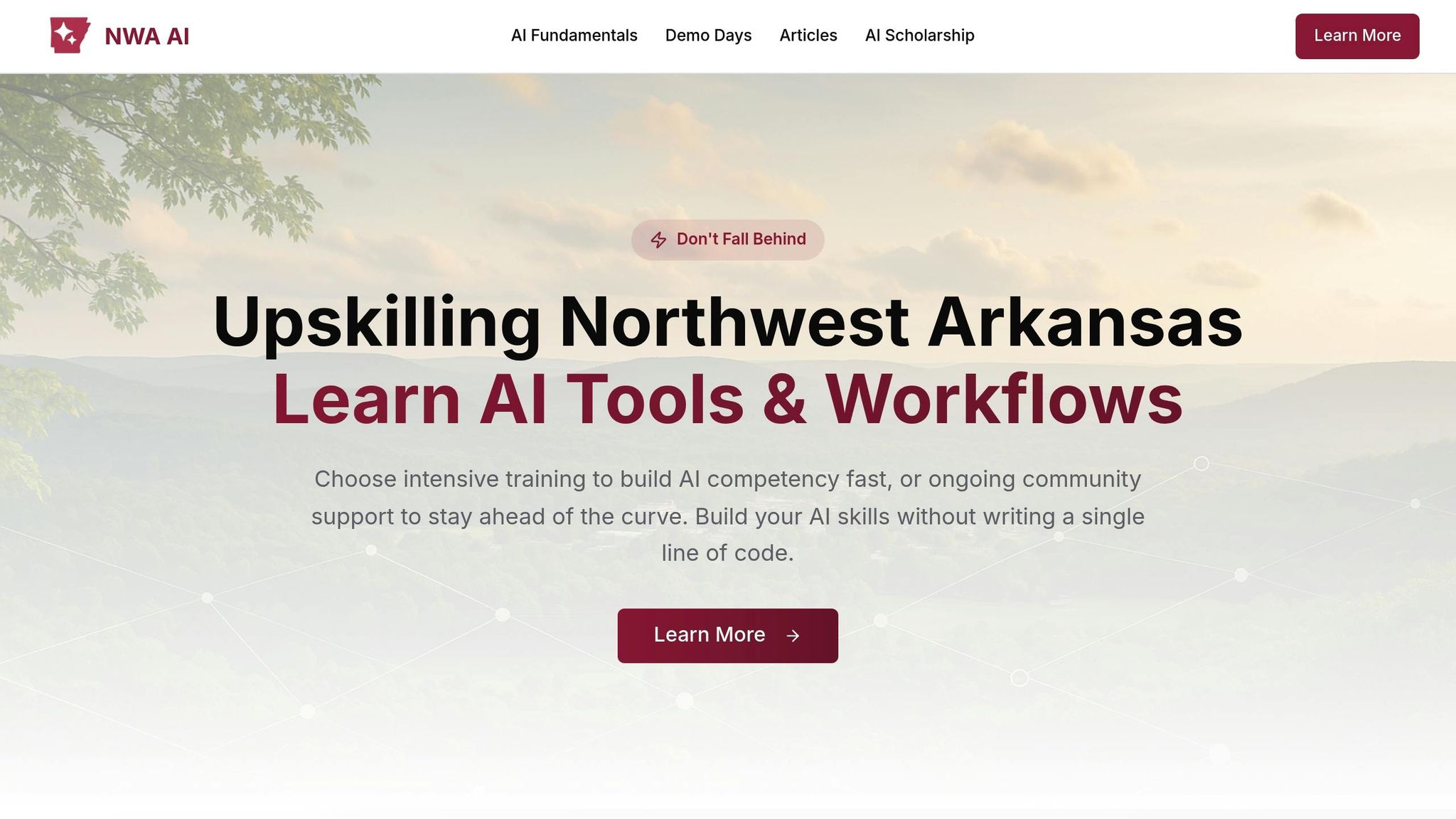
NWA AI focuses on hands-on, practical AI training designed to make the technology approachable for professionals across all industries. Their programs are structured into three tracks:
- AI Literacy: Covers essential concepts for beginners.
- AI Leverage: Focuses on using AI tools effectively.
- AI Adoption: Guides organizations on integrating AI into their operations.
Their standout offering is the Tech Leaders' AI Trade School, which provides a comprehensive curriculum. Students dive into "AI-First Fundamentals" and learn about AI tools, workflows, and strategies for product development and market launch. The program is designed to teach practical skills without requiring any coding knowledge.
"After spending thousands on top-name university programs that were all theory and no practice, I finally found Tech Leaders' AI Trade School. It's the only program that actually walks you through building your own AI product, step-by-step, with real tools and support."
– NWA AI Student
Additionally, their Monthly AI Demo Days allow participants to learn from real-world AI projects and connect with the local AI community.
NorthWest Arkansas Community College (NWACC)
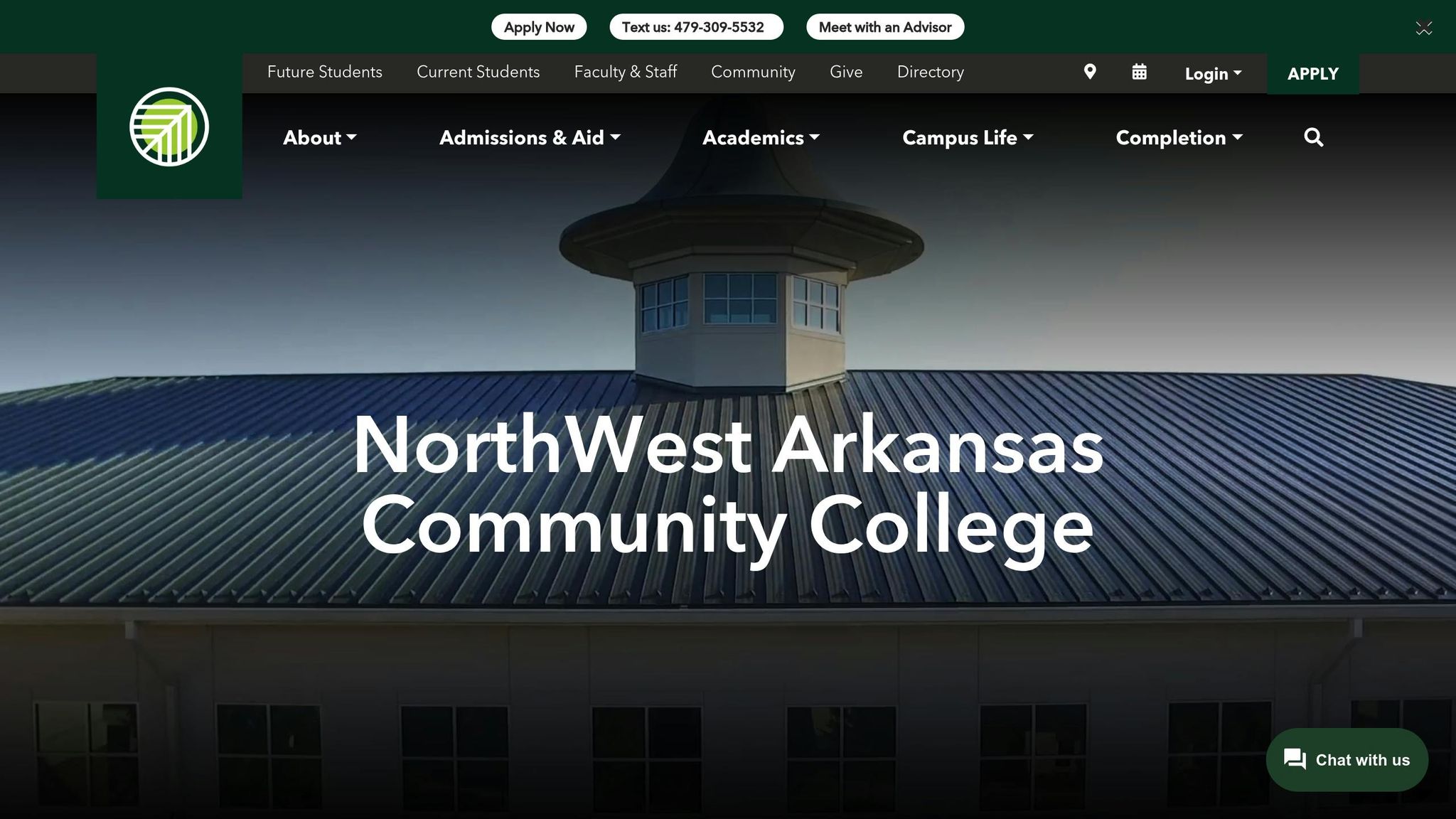
NWACC offers a structured academic approach to AI education. Their workshop series, held at Burns Hall on October 17, November 14, and December 12, 2025, culminates in an 18-hour Certificate of Proficiency in Artificial Intelligence. This program covers topics like data science, technical reading and writing, AI ethics, and an overview of AI applications. It’s an excellent option for professionals looking for formal academic credentials.
As a member of the National Applied Artificial Intelligence Consortium (NA-AIC), NWACC integrates industry-leading resources such as the Google AI learning series and Microsoft Copilot tools into their curriculum. This ensures their programs stay aligned with current industry standards.
For those seeking additional opportunities, state-sponsored initiatives complement NWACC's offerings, making AI education even more accessible.
State-Sponsored Google AI Training
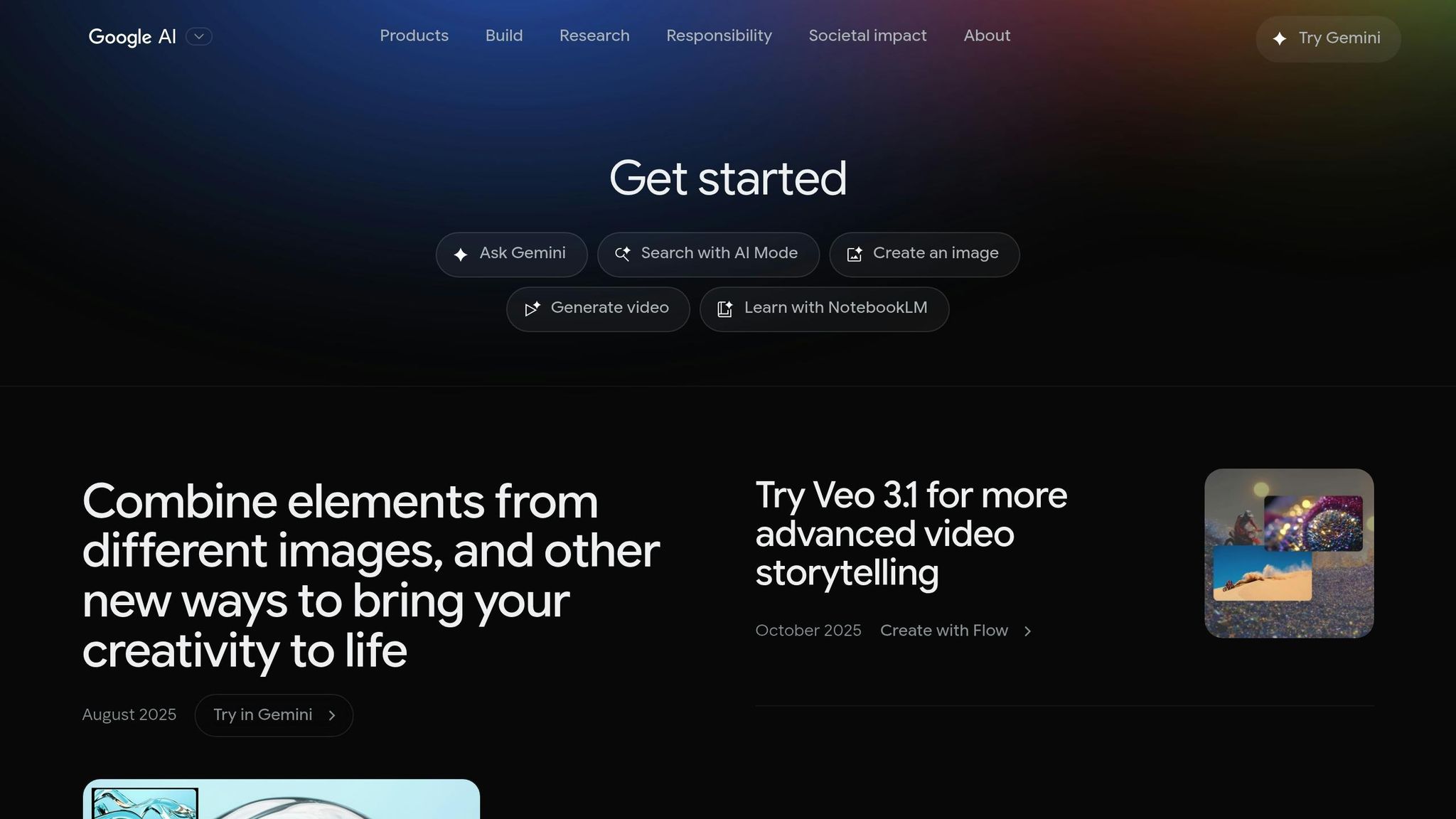
Through a partnership launched in October 2025, Arkansas residents aged 18 and older can access free Google AI courses. These self-paced programs, which take about five hours each, cover topics like generative AI tools, responsible AI practices, and prompt engineering. The courses are taught by Google AI experts.
The Google Career Certificate Program has a strong track record, with over 70% of graduates reporting career advancements - such as new roles, promotions, or salary increases - within six months of completing the program. Most participants finish their training in three to six months, even without prior AI experience.
Training Comparison Overview
| Provider | Program Type | Duration | Cost | Key Features |
|---|---|---|---|---|
| NWA AI | Training tracks | Varies | Not specified | Hands-on training, no coding required, mentorship |
| NWACC | Workshops & Certificate | 18-hour certificate | Varies | Academic credit, NA-AIC resources |
| Google (State Partnership) | Online courses | 3–6 months | Free | Flexible, industry-recognized certificate |
Choosing the Right Program
Selecting the right program depends on your career aspirations. If you're looking for immediate, practical skills, NWA AI’s hands-on approach might be the best fit. For those seeking formal academic credentials, NWACC’s certificate program provides a solid foundation. And if you’re just starting out or exploring AI, the free Google courses offer an excellent introduction.
"The atmosphere is inviting and safe - even for non-technical students. No one is judged for asking questions, and the instructors respond with patience and kindness every time."
– NWA AI Student
Keep in mind that early registration is encouraged for NWACC workshops due to limited availability. Meanwhile, NWA AI emphasizes ongoing mentorship and a strong sense of community throughout their programs, ensuring students feel supported every step of the way.
AI Skills Comparison Chart
In earlier discussions, we highlighted how having a diverse AI skill set is key to thriving in Northwest Arkansas. Deciding which AI skills to focus on can feel like a juggling act when trying to align personal career goals with the demands of modern businesses. To simplify that decision, the table below outlines key skill areas, their strengths, and their challenges, helping you map out your AI learning journey.
Each skill comes with its own set of benefits and hurdles. By understanding these nuances, you can decide which skills to prioritize based on your current job, industry needs, and long-term career ambitions in Northwest Arkansas's dynamic job market. Take a look at the table to see how these skills stack up.
AI Skills Comparison Table
| Skill Area | Advantages | Limitations | Business Impact |
|---|---|---|---|
| AI Literacy and Strategic Thinking | Helps identify AI opportunities, align initiatives with business goals, and build leadership confidence | Requires continuous learning due to the rapid pace of technological advancements | Enhances strategic decisions and clarifies AI for leadership teams |
| Prompt Engineering and AI Tool Proficiency | Boosts productivity, solves complex problems, and delivers immediate workflow improvements | Limited by the capabilities of existing tools and demands frequent updates as tools evolve | Drives efficiency and sparks innovation, yielding measurable productivity gains |
| Data Analysis and Decision-Making with AI | Provides actionable insights, supports data-driven decisions, and improves operational results | Requires foundational knowledge in data literacy and statistical concepts | Revolutionizes operational processes and strategic planning with deeper insights |
| Ethical AI Use and Governance | Builds trust with stakeholders, ensures compliance, and reduces legal and reputational risks | Challenging to implement due to shifting regulations and internal resistance | Protects organizational reputation and supports responsible, long-term AI adoption |
| Collaboration and Human-AI Teaming | Enhances teamwork, encourages innovation, and improves overall workflow effectiveness | Demands significant cultural shifts and strong change management | Creates a competitive edge by optimizing human-AI partnerships |
Breaking Down the Insights
The table above highlights the strengths and challenges of each skill area, backed by local data and examples. For instance, businesses involved in NWA AI programs have seen faster adoption of AI and better strategic planning thanks to strong strategic thinking skills. These skills are particularly valuable for leadership roles aiming to integrate AI into long-term business strategies.
Data analysis skills, while transformative for operations, can be daunting for those without a technical background. However, the payoff is undeniable, as better data-driven decisions lead to streamlined processes and improved outcomes. Similarly, ethical AI governance is becoming a must-have as organizations prioritize responsible AI practices. While implementing these frameworks can be complex, they play a critical role in safeguarding a company’s reputation and ensuring compliance.
Collaboration and human-AI teaming stand out for their ability to enhance team dynamics and drive innovation. Companies in the region utilizing AI for workflow automation have reported noticeable improvements in team performance. However, success in this area often hinges on a supportive organizational culture and strong leadership.
For professionals unsure where to start, non-technical roles can benefit from focusing on AI literacy and prompt engineering for quick wins in productivity. On the other hand, technical professionals may find data analysis more relevant, while leaders should concentrate on strategic thinking and ethical governance to guide their teams effectively.
Getting Ready for AI in Your Career
The job market in Northwest Arkansas is shifting fast, with 24.7 new AI jobs per 100,000 residents posted in just the first quarter of 2024. This places the region among the top emerging AI job markets in the U.S.. For professionals, this means one thing: investing in AI skills now can open doors to higher-paying roles and career growth. The key? Building the right skills to match this demand.
You don’t need a technical background to get started with AI. Local programs make it easier than ever to gain foundational skills. For example, NWACC offers certifications, while NWA AI provides hands-on training to help beginners take their first steps into the field.
The financial rewards are already clear. Local AI job postings offer salaries as high as $65,000, and bootcamp graduates report placement rates of up to 92%.
"AI tools have become integral to my daily work, streamlining processes and freeing up significant time for strategic contributions." – Pamela Johnston, Senior Business Analyst
Staying competitive in AI requires ongoing education. With technology evolving at lightning speed, continuous learning is crucial. The good news? Opportunities are expanding. Free Google AI courses are now available through partnerships, and over 70% of graduates report career advancements after completing these programs.
Networking is another critical piece of the puzzle. NWA AI hosts monthly virtual AI Demo Days, where professionals can check out live demonstrations of cutting-edge AI projects and connect with experts from around the world. NWACC, a member of the National Applied Artificial Intelligence Consortium, gives local professionals access to national resources and advanced tools from major players like Google and Microsoft. These events and resources not only boost your skills but also open doors to real career opportunities.
Now is the time to take action. Chris Lynch of NWACC highlights the importance of aligning your training with your current experience and the demands of your industry. Whether you’re just starting with basic AI concepts or diving into specialized applications, a mix of structured learning, hands-on practice, and community involvement will set you up for success in Northwest Arkansas’s booming AI sector.
As the region continues to establish itself as a growing AI hub, early adopters have a unique chance to get ahead. By tapping into local programs and staying connected with the innovation community, you can prepare for the AI-driven future and secure your place in this transformation. This forward-thinking approach not only enhances individual careers but also strengthens Northwest Arkansas’s reputation as a leader in AI advancements.
FAQs
What AI skills will be most in demand in Northwest Arkansas by 2025?
By 2025, businesses in Northwest Arkansas will be on the lookout for professionals who excel in working with AI models and tools, crafting effective prompts for AI systems, and analyzing data to improve AI performance. These skills will play a key role in helping companies integrate AI into their operations, making processes more efficient, improving decision-making, and sparking new ideas.
Getting ahead by building these abilities today will be crucial for staying relevant in the region's shifting job market.
What are the best ways for professionals in Northwest Arkansas to learn AI without a technical background?
Professionals in Northwest Arkansas now have the chance to build AI expertise without needing a technical background, thanks to specialized programs from NWA AI. These programs emphasize AI literacy, hands-on training with AI tools, and practical strategies to integrate AI into workflows - all without requiring any coding knowledge.
One highlight is a 12-week part-time program tailored for knowledge workers from diverse industries. This program’s flexible structure allows participants to enhance their AI skills while managing their existing work commitments seamlessly.
What ethical challenges come with using AI in business, and how can companies in Northwest Arkansas adopt AI responsibly?
Using AI in business brings a host of ethical challenges. These include safeguarding data privacy, preventing algorithmic bias, and ensuring transparency in how decisions are made. Beyond that, companies must weigh the broader societal effects of AI, like its impact on jobs and local communities.
For businesses in Northwest Arkansas aiming to adopt AI responsibly, a few steps can make a big difference. Start by fostering AI literacy among team members to ensure they understand and can engage with the technology. Establish clear ethical guidelines to steer AI use, and make fairness and accountability top priorities in every application. Local training programs can also play a vital role, equipping teams with the skills and strategies needed to integrate AI into their workflows while staying aligned with ethical principles.
Build real AI capability on your work
The AI training programs are part of how Northwest Arkansas is approaching AI adoption.
Get involvedRelated Articles

ROI and KPIs in AI Process Optimization
Measure AI impact with ROI and KPIs: set baselines, track hard and soft ROI, and monitor model, system, and business KPIs to validate performance and value.

How Blended Learning Improves AI Upskilling
Blended learning, online modules plus hands-on workshops, boosts AI skill retention, engagement, and real-world application for faster workplace upskilling.

5 Steps to Define AI Workflow Goals
Set measurable AI workflow goals in five steps: map processes, set SMART targets, pinpoint AI opportunities, define KPIs, and align with strategy.